
CERTIFICATION PATHWAY
Regulations and Certification
The FAA isn’t blocking eVTOL—they’re actively building certification pathways. As a US aerospace company pursuing FAA powered-lift certification with parallel Transport Canada engagement, our regulatory pathway is viable and de-risked.
THE REGULATORY REALITY
Better Than You Think
When people say technology won’t be approved or regulations will kill it, they’re using outdated thinking. Aviation authorities worldwide are racing to enable advanced air mobility, not block it. Ryze’s regulatory pathway is viable and de-risked.
FEDERAL AVIATION ADMINISTRATION
FAA: Leading the AAM Revolution
Innovate28: The FAA’s AAM Plan
The FAA launched Innovate28, enabling integrated AAM operations by the 2028 Los Angeles Olympics. This is a binding federal roadmap with deliverables, timelines, and accountability—not aspirational.
- →Certification pathways for powered-lift aircraft (eVTOL)
- →Infrastructure for vertiports and charging stations
- →Air traffic management integration for urban operations
- →Public-private partnerships accelerating deployment
- →Federal funding and grants for AAM developers
Powered-Lift: A New Aircraft Category
In 2024, the FAA created the “Powered-Lift” aircraft category—the first new aircraft category in nearly 100 years. Advisory Circular AC 21.17-4 establishes the certification pathway for powered-lift aircraft, including eVTOL.
- ✓The FAA isn't forcing eVTOL into outdated regulations
- ✓Modern, purpose-built framework for vertical takeoff electric aircraft
- ✓Demonstrates regulatory flexibility and commitment to innovation
- ✓Joby Aviation and Archer received final airworthiness criteria
2026 Signal: Industry Moving to Commercial
Recent analysis confirms commercialization momentum. The FAA isn’t stalling AAM but iterating frameworks in parallel with industry progress—exactly what Ryze needs as we advance toward powered-lift certification.
AIN (Mar 2026): Advanced Air Mobility edging toward commercial launch. Aerospace Testing International (Feb 2026): Personal eVTOL flight testing accelerating under FAA’s MOSAIC framework.
Hydrogen Propulsion: FAA Ahead of Curve
In December 2024, the FAA released its “Hydrogen-Fueled Aircraft Safety and Certification Roadmap.” The FAA Reauthorization Act of 2024, Section 1019 mandates FAA work on a hydrogen aviation strategy.
Hydrogen isn’t speculative—it’s federally mandated and funded. Our Ryze 1 → Ryze 2 hydrogen transition aligns perfectly with FAA’s timeline. Universal Hydrogen and ZeroAvia are in active FAA certification programs right now.
INTERNATIONAL HARMONIZATION
471 Million People. One Framework.
The FAA partnered with Canada (Transport Canada), UK (CAA), Australia (CASA), and New Zealand (CAA) to create the “Roadmap for Advanced Air Mobility Aircraft Type Certification.” This harmonizes certification standards across all five countries, enabling data sharing, test result acceptance, and mutual validation.
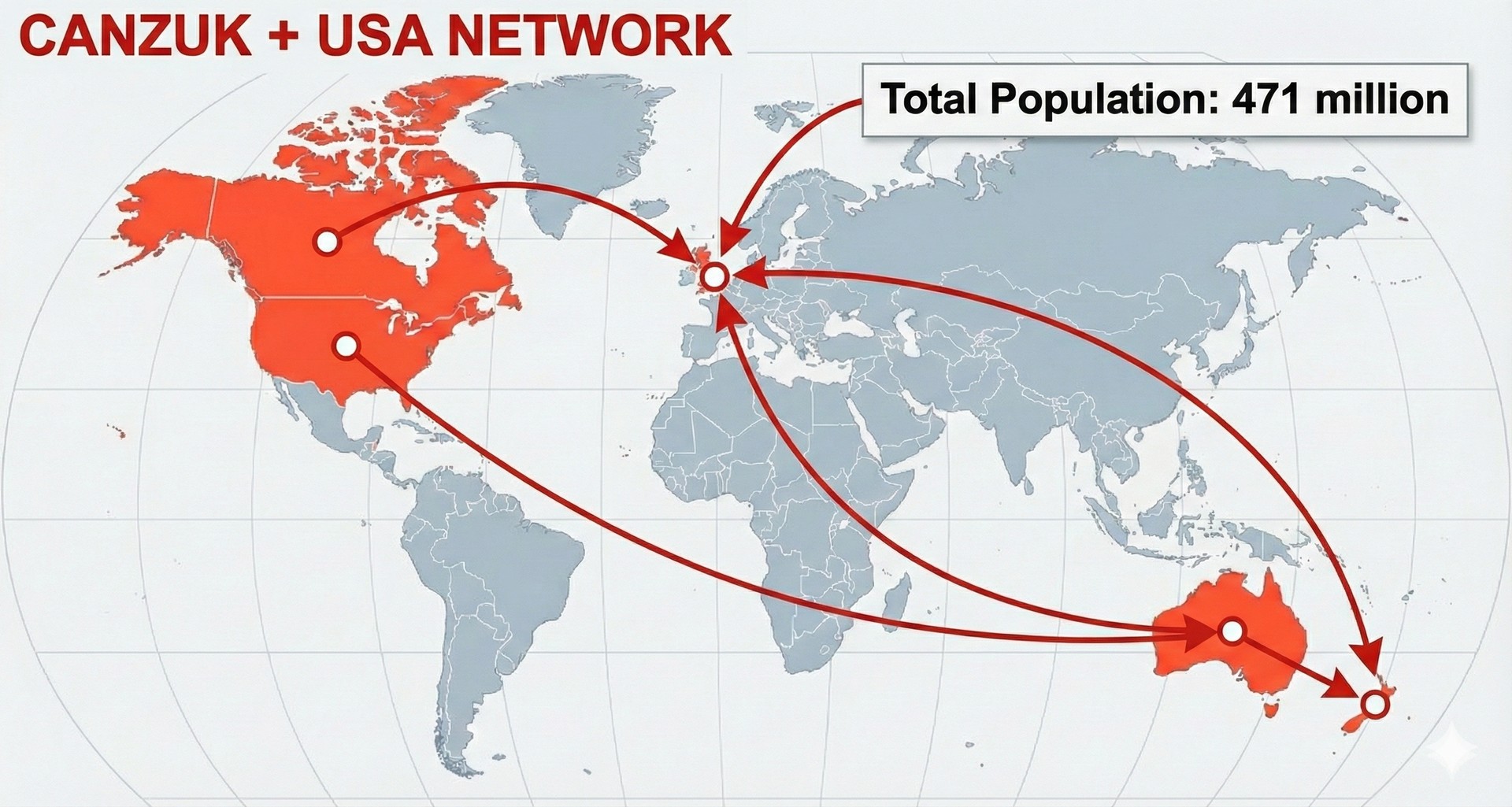
World's largest aviation market
R&D base, Transport Canada fast-track
AAM Roadmap member
AAM Roadmap member
AAM Roadmap member
OUR STRATEGY
Ryze’s Dual-Track Regulatory Strategy
PRIMARY PATH
FAA Powered-Lift Certification
- →2025–2026: Early FAA engagement, share technical architecture
- →2027–2028: Prototype testing, FAA observation program
- →2028–2030: Formal FAA type certification process
- →2030+: FAA Type Certificate obtained
USA is our primary market. Powered-lift category is proven (Joby, Archer precedent). We’re a US company—regulatory alignment is natural.
PARALLEL FAST-TRACK
Transport Canada Certification
- →Collaborative AAM division actively seeking industry engagement
- →Historically more streamlined timeline than FAA for novel aircraft
- →Heavy Canadian government investment in hydrogen economy
- →AAM Roadmap member — TC certification enables streamlined FAA validation
Our Canadian subsidiary (Ryze Mobility Canada, Inc.) performs R&D and testing, accessing McMaster University talent, SR&ED, IRAP, and MITACS grants.
THE HYBRID STRATEGY
“Ryze Mobility is a US aerospace company pursuing FAA powered-lift certification for the world’s largest aviation market. We’re de-risking our timeline through parallel Transport Canada certification, which gets us flying 2–3 years earlier while maintaining full FAA alignment via the AAM Roadmap. Our Canadian subsidiary performs R&D and testing, accessing top engineering talent and grant funding, while all IP remains with our US parent company. This dual-track approach maximizes capital efficiency, accelerates time-to-flight, and ensures US market access.”
SAFETY: THE REGULATORY PRIORITY
Ryze’s Safety Architecture
Aviation regulators care about one thing above all: safety. If you can demonstrate safety, certification follows. Our AI-Based Dynamic Redundancy system provides a safety story regulators prioritize.
AI BDR: AI-Based Dynamic Redundancy
- ✓Real-time motor health monitoring across 8 independent electric motors
- ✓Predictive failure detection using AI/ML models
- ✓Autonomous failover and power redistribution on motor degradation
- ✓Multi-layer redundancy exceeding traditional twin-engine safety margins
Dual-Mode Innovation
Most eVTOL companies develop pure aircraft. Ryze is developing a transformable vehicle operating both on roads and in the air. Novel categories often receive tailored regulatory frameworks rather than being forced into ill-fitting legacy regulations.
Early collaboration positions us as partners in defining the standards—a competitive advantage over companies waiting for regulations to emerge.
CERTIFICATION ROADMAP
Timeline
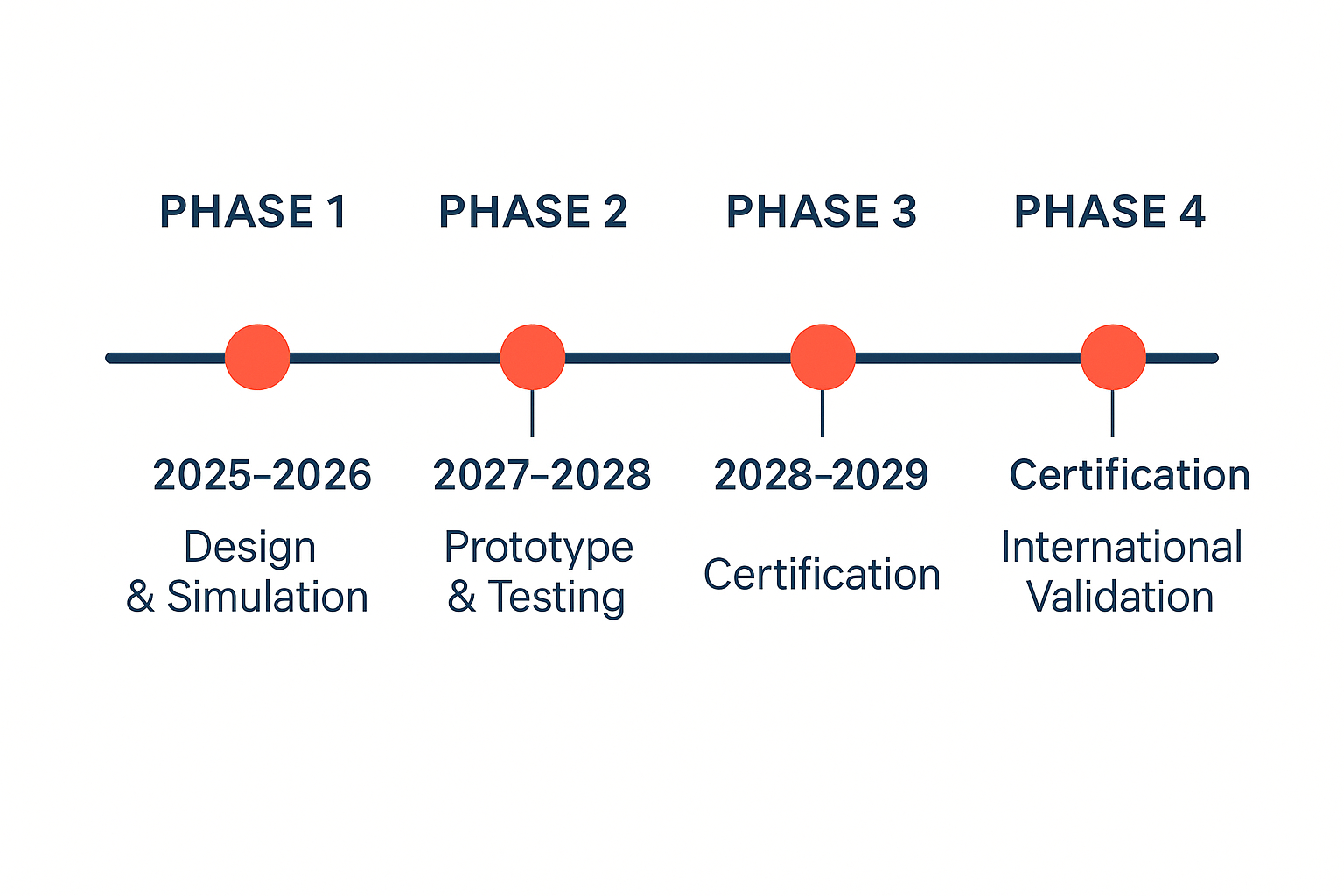
Phase 1 · 2025–2026
Early Engagement
- →Initiate contact with FAA Aircraft Certification Service (AIR)
- →Introduce Ryze to FAA's Innovate28 AAM initiative
- →Engage Transport Canada Advanced Air Mobility division
- →Share technical specifications and safety architecture
- →Establish dual-track regulatory contacts
Phase 2 · 2027–2028
Prototype & Testing
- →First flight of Ryze 1 prototype
- →Ground testing of dual-mode transitions
- →Flight testing under FAA and TC observation
- →Safety validation of AI BDR system
- →Hydrogen fuel cell integration testing (Ryze 2 path)
Phase 3 · 2028–2030
Formal Certification
- →Submit formal TC type certification application (Q1 2029)
- →Target: Canadian Type Certificate by Q4 2029
- →Parallel FAA certification application (2029)
- →Leverage TC test data via AAM Roadmap
- →Target: FAA Type Certificate by 2030–2031
Phase 4 · 2030+
International Validation
- →FAA Type Certificate (US market access)
- →TC Type Certificate (Canadian market access)
- →UK (CAA) validation via AAM Roadmap
- →Australia (CASA) validation via AAM Roadmap
- →New Zealand (CAA) validation via AAM Roadmap
INVESTOR PERSPECTIVE
Regulatory Risk: Significantly De-Risked
The traditional concern—“Regulators will never approve this / it’ll take decades”—doesn’t match today’s reality:
FAA has committed to AAM via Innovate28 (2028 target for operations)
Powered-lift category exists — Joby and Archer progressing through certification
Hydrogen pathway established — FAA Roadmap published Dec 2024, federal mandate
International harmonization reduces validation barriers across 5 major markets
Dual-track strategy de-risks timeline (TC fast-track, FAA primary)
US company structure aligns with FAA engagement and investor expectations
The question isn’t “Will regulators approve this?”
The question is: “Are we positioned to lead the certification pathway?”
And the answer is yes. The regulatory path exists. We’re walking it strategically.
Last updated: November 2025
Key Regulatory Resources
US FAA
- Innovate28 AAM Program
- Powered-Lift Certification (AC 21.17-4)
- Hydrogen Aircraft Roadmap
Transport Canada
- Advanced Air Mobility Division
- AAM Information Portal
- Canadian Aviation Regulations Part V
US Aerospace Grants
- NASA AAM Program
- NSF SBIR
- DARPA / AFWERX