WILDFIRE CRISIS — HAPPENING NOW
Rapid Response to Wildfires: The Technology We Need Now
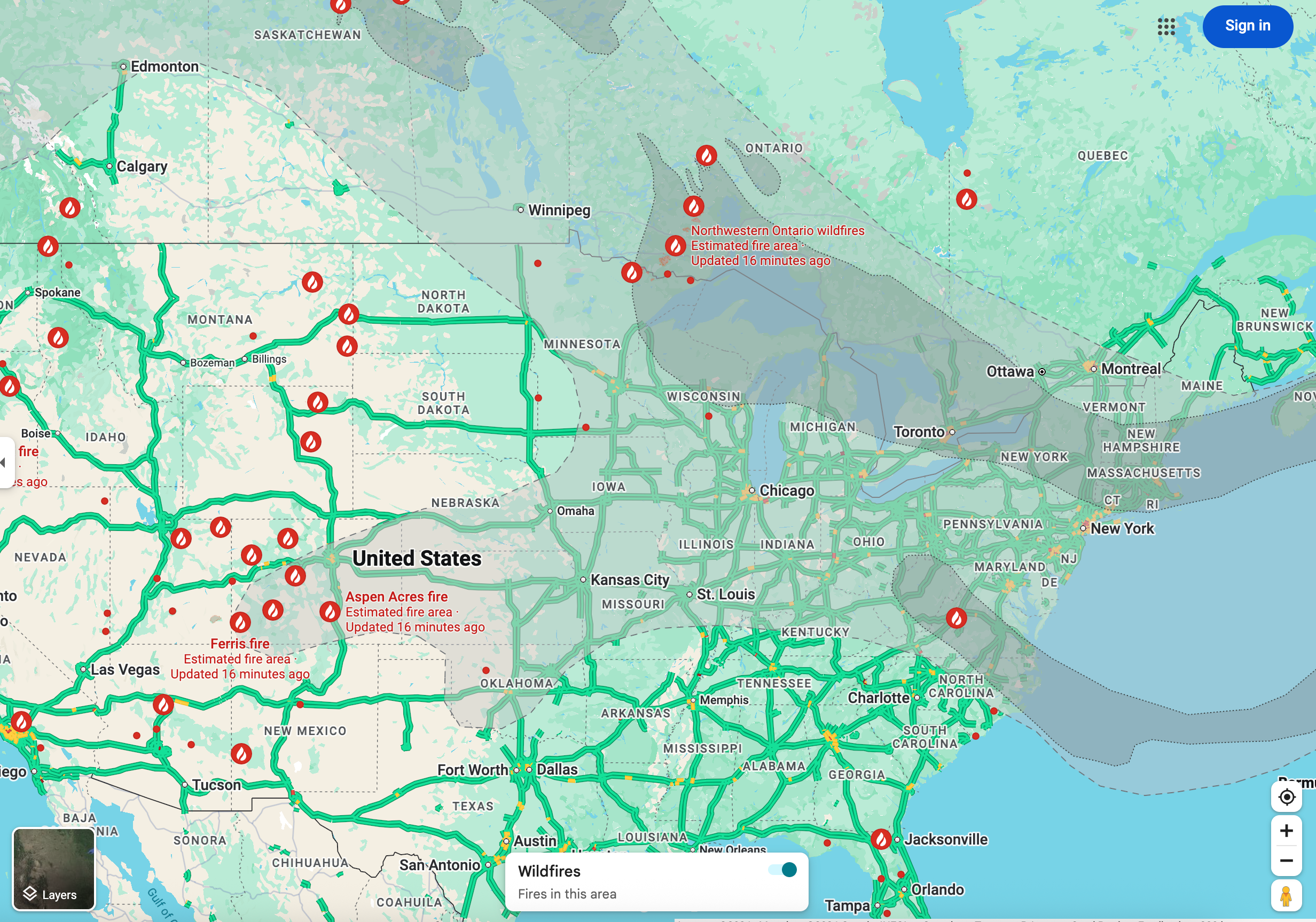
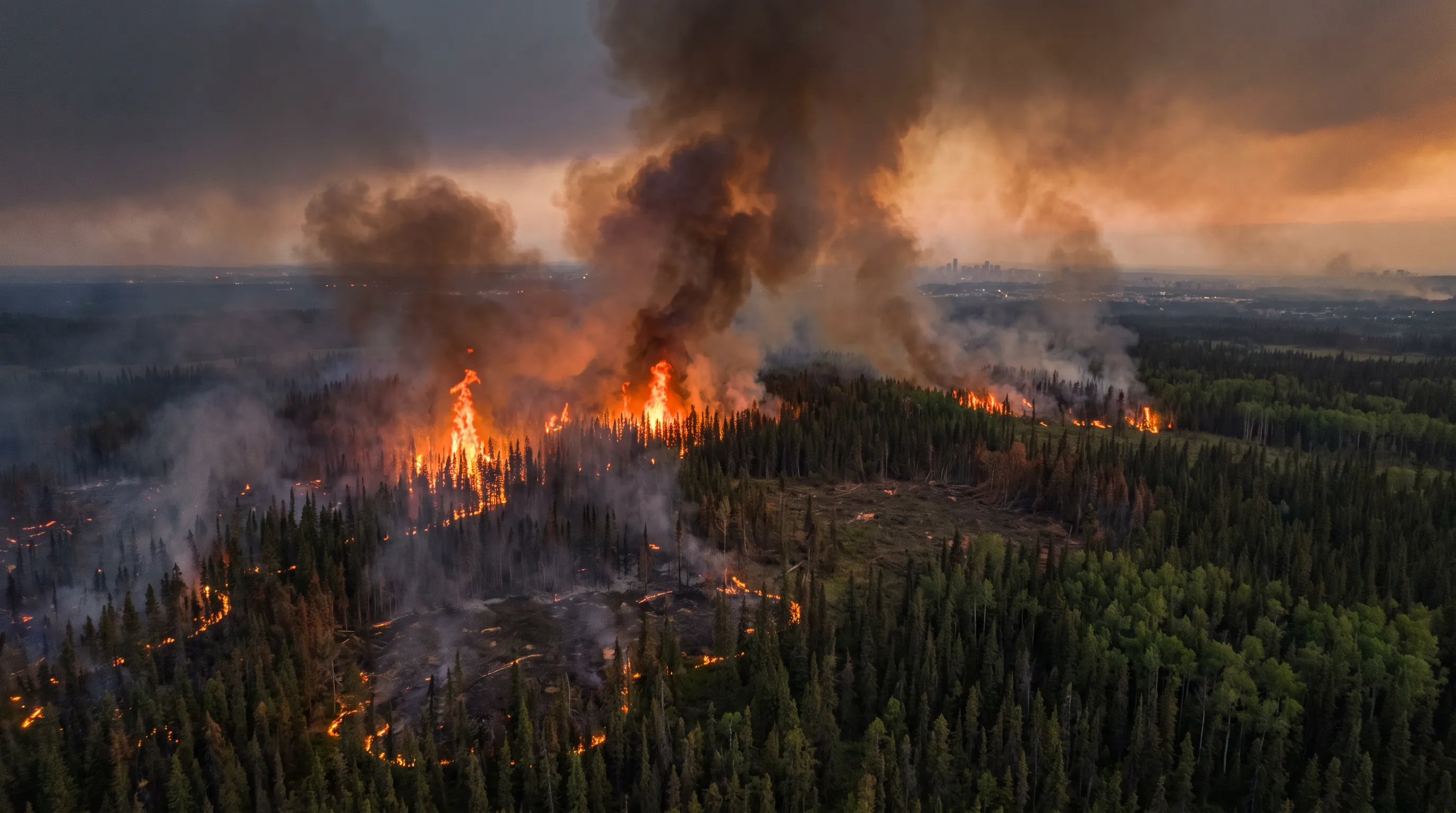
Major wildfires are burning right now across Northern Ontario and the United States — devastating communities, choking air quality as far as Toronto, Ottawa, Montreal, Chicago, and New York, and erasing years of environmental progress in a matter of days.
This Is Not a Hypothetical
Right now, wildfires are burning across Northern Ontario and the United States — displacing families, threatening entire towns, and forcing evacuation orders across multiple regions at once. Smoke from these fires does not stay local. Current tracking shows the plume stretching south and east out of Northwestern Ontario, blanketing Toronto, Ottawa, and Montreal before pushing across the border into Chicago and as far as New York — pushing air quality in those cities into hazardous territory for days or weeks at a time.
These are not isolated events. They are the pattern. Every fire season now carries the risk of undoing years of environmental progress in a matter of days — releasing more carbon, destroying more habitat, and costing more in emergency response than the sustainability gains it erases.
As a society, we invest heavily in environmental choices and sustainable practices — yet a single wildfire season can undo that progress entirely.
THE REAL PROBLEM
The Gap Isn't Effort. It's Speed.
Governments, companies, and communities are not short on commitment to sustainability. They are short on the technology to respond at the speed a modern wildfire actually moves. Traditional firefighting infrastructure was built for a slower fire season, staged at fixed airstrips and dispatched after a fire is already reported and already growing.
By the time conventional aircraft are airborne, the response is no longer proactive — it is damage control. Closing that gap does not require more effort. It requires a different class of technology, positioned differently, and ready to move the moment a fire starts.
THE SOLUTION
Introducing Ryze Fire
Ryze Fire is rapid-response aerial technology built to close the speed gap. Aircraft are pre-positioned at strategic locations and deployed in grid formation across high-risk forest zones — providing coverage and response times that traditional firefighting infrastructure simply cannot match.
Instead of a single airstrip serving a wide radius, a grid of pre-positioned Ryze Fire aircraft means the nearest response is always minutes away, not hours. That is the difference between stopping a fire and managing a disaster.
THE AIRCRAFT
Ryze Fire 2000
In-Flight Drop
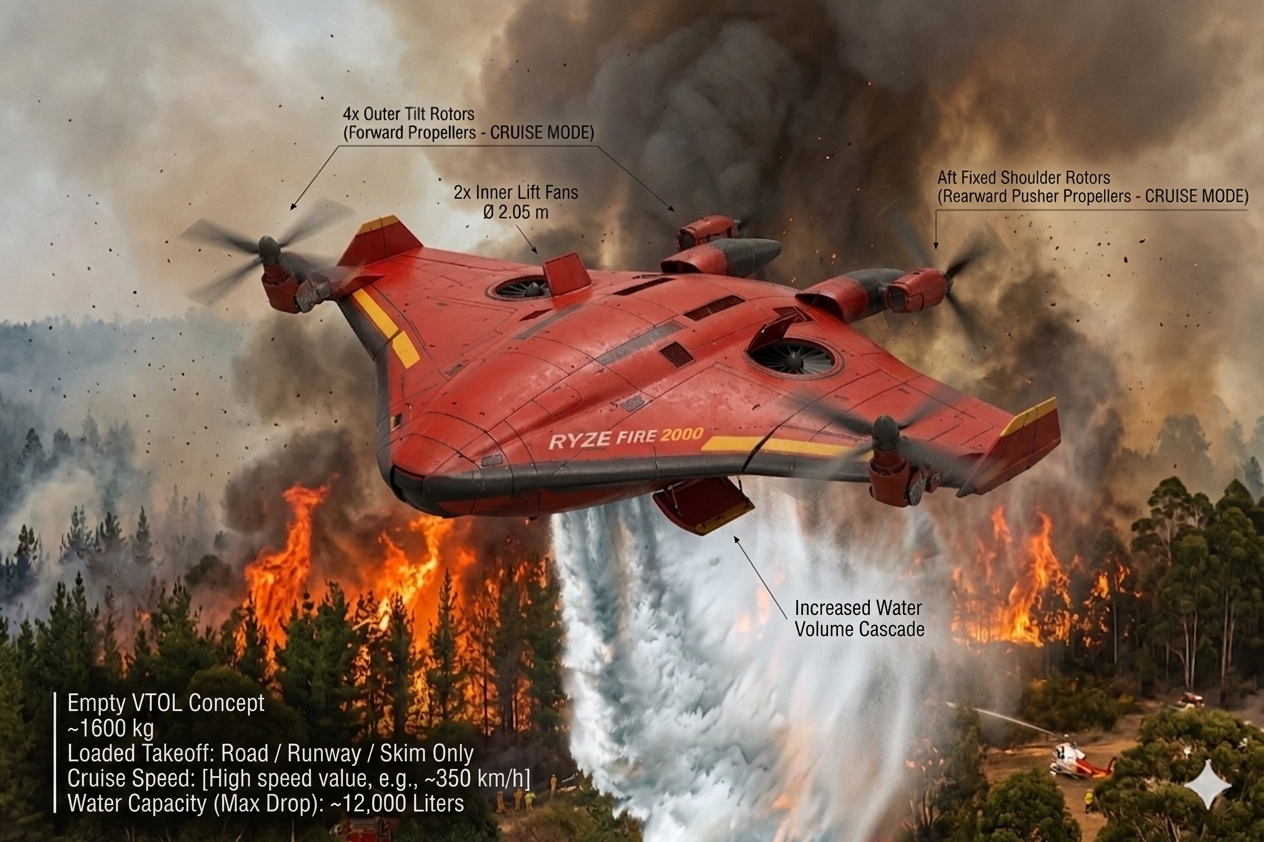
~2,000L water capacity, deployed direct over active fire lines.
Rapid Deployment
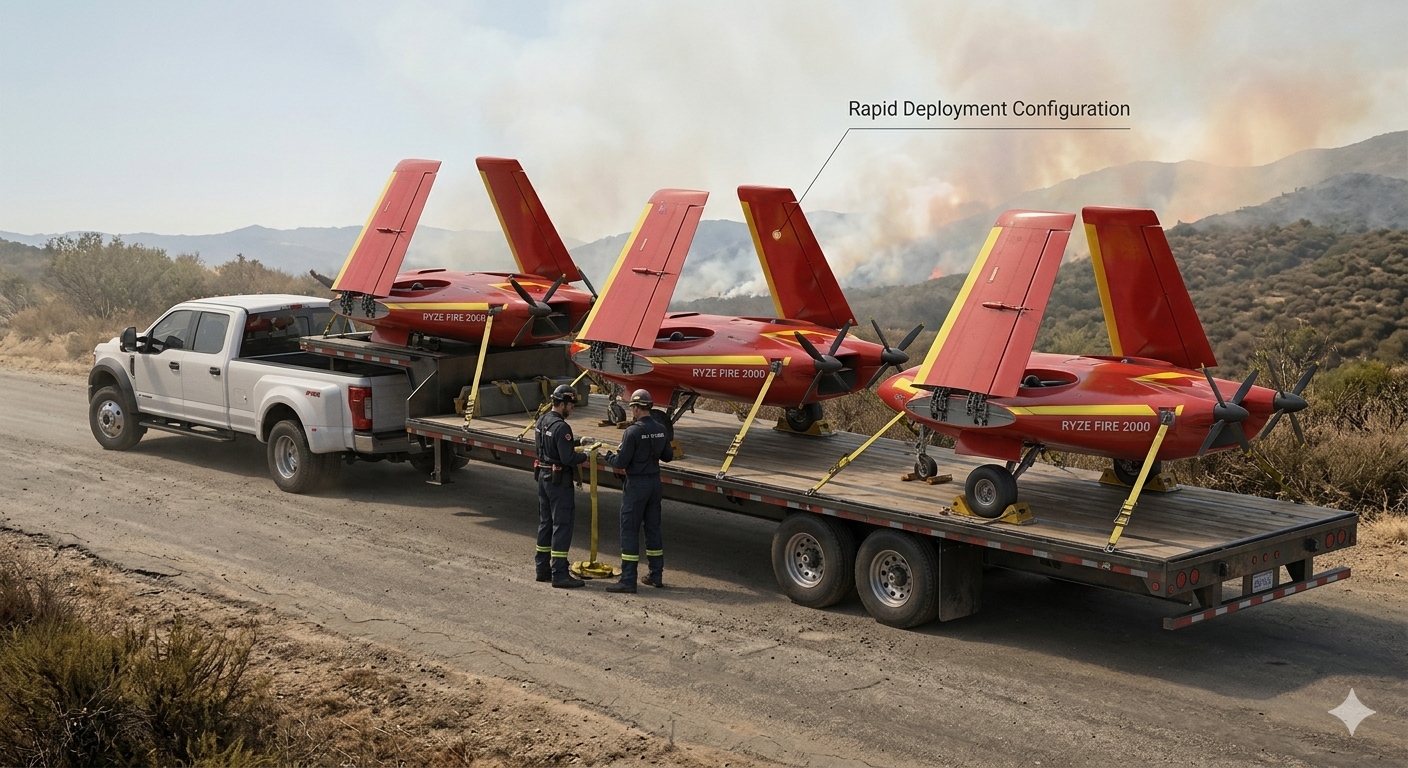
Grid-staged units ready to roll toward a fire the moment it's reported.
Built for Speed
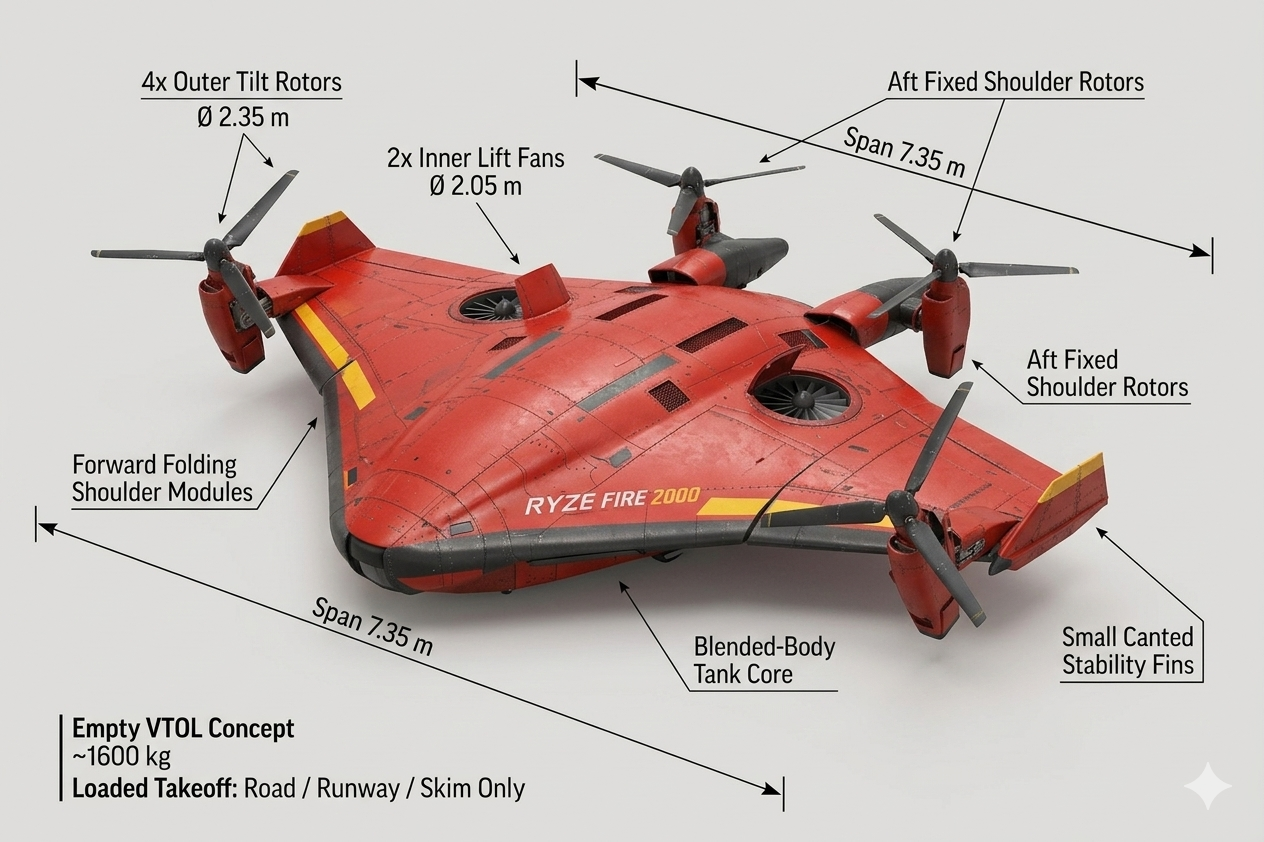
A blended-body VTOL airframe with a 7.35m span, engineered for cruise speed.
Why This Changes the Math
Three reasons speed and positioning matter more than raw firefighting capacity.
FASTER CONTAINMENT
Better technology means faster containment.
The difference between a contained fire and a megafire is not effort or funding. It is how quickly suppression capacity reaches the ignition point. Faster aircraft change the outcome.
PROACTIVE, NOT REACTIVE
Grid positioning is protection, not damage control.
Pre-positioned aircraft staged across high-risk forest zones are already close when a fire starts. That is a fundamentally different posture than dispatching from a distant airstrip after a fire is already reported.
AIR QUALITY, PROTECTED
Stopping fires early protects the air millions breathe.
Smoke from wildfires hundreds of kilometers away routinely pushes air quality in Toronto, Ottawa, Montreal, Chicago, and New York into hazardous territory. Containing a fire in its first hours keeps that smoke out of those skies entirely.
FROM OUR BLOG
Latest Analysis
Our latest thinking on wildfire technology and rapid response, as new fire events put it to the test.
The Technology Exists. Deployment Is the Question.
Governments, emergency managers, and forestry agencies are looking for the next generation of wildfire response. Ryze Fire is built to be that answer — ready to protect the communities and the air quality that a slow response can't.